



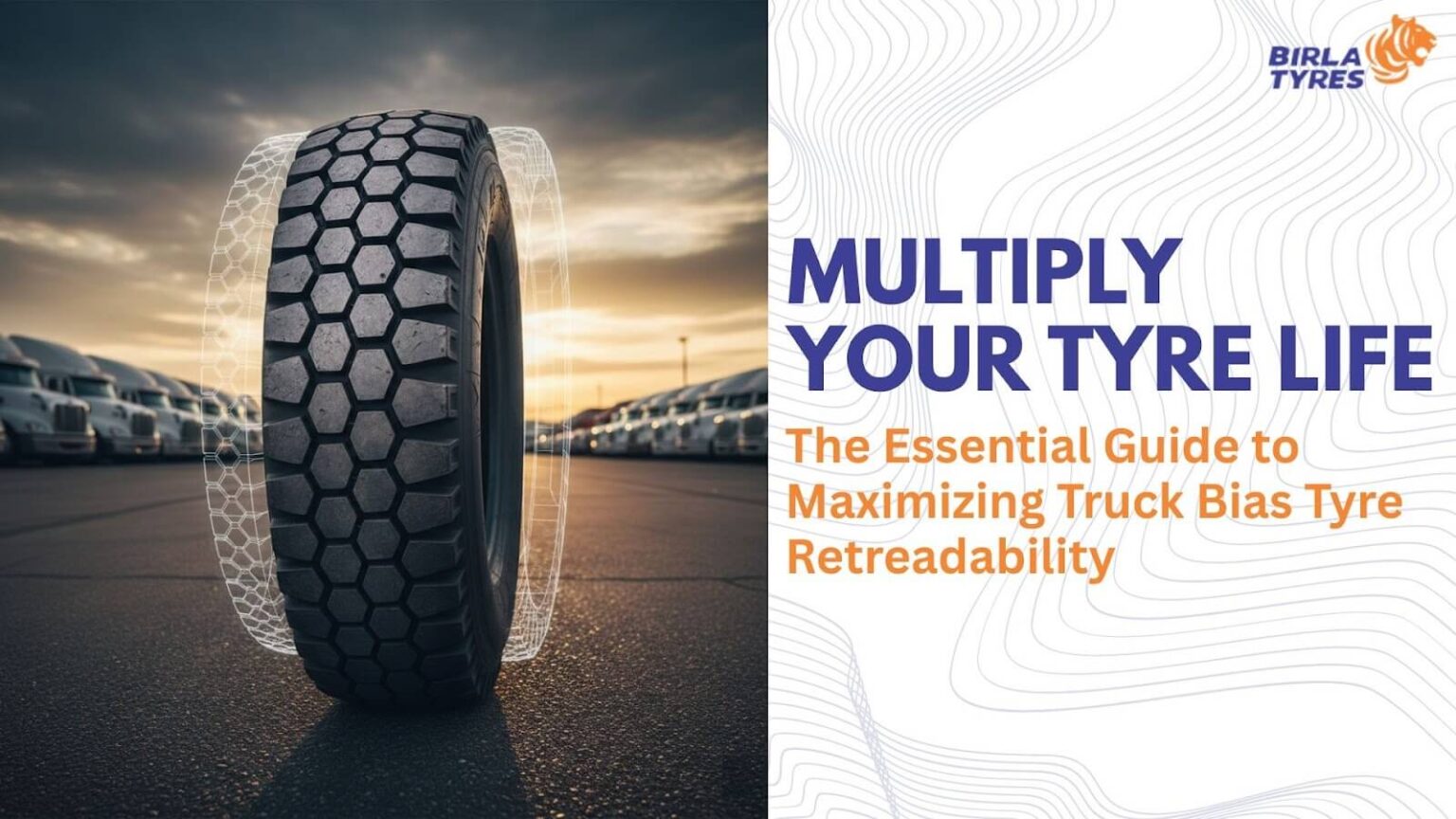

Tyres are more than just components in the world of the commercial trucking industry. They are critical assets that keep operations running smoothly. Fleet operators, logistics company managers, and truck drivers face direct consequences if their tyres fail.
From safety, operational costs, and uptime, vehicle tyres are the bearer of many things. That’s why maintaining tyres and retreading them on time is essential. Retreading reduces heavy replacement costs while also working as a sustainable solution, allowing users to explore different ways of maximizing the tyre lifespan.
Retreading your truck’s bias tyres can significantly improve the tyres’ health and lifespan. Want to know how? Here’s a comprehensive guide to help.
Understanding Bias Tyres and Retreadability
Bias tyres come with a cross-ply design, and they also go by the name cross-ply tyres. The fabric cords of these tyres are placed diagonally across the casing from bead to bead.
Thanks to this design, the construction layers become stronger and form a stiffer sidewall, making the tyres exclusively efficient for off-road operations. These tyres are efficient at mines, construction sites, and heavy-duty agricultural farms.
Yes, radial tyres are also retreadable. But, bias tyres have a more uniform tread wear pattern and stiffer sidewall, which can contribute positively to their retreadability. That said, not all bias tyres are built equally. Some may have varying casing strength, different sidewall conditions, and varying degrees of tread wear.
Retreadability of a tyre depends on all these different factors. Additionally, well-maintained tyres are easy to retread and can be retreaded multiple times, extending the tyre’s service life.
Factors That Affect Retreadability
The following are the factors that affect the retreadability of the tyre.
1. Tyre Selection
Choosing the right tyre is critical to maximizing its service life. Choose the right tyre to ensure longer service life and multiple retreads. Ensure that the tyre you’re using has high-quality rubber compounds. These features enhance casing durability and resistance to damage, making the tyre a better candidate for future retreading.
2. Operational Conditions
The environment in which a tyre operates plays a significant role in its wear and tear. Additionally, it also affects its retreading potential.
Rough terrains, extreme temperatures, and abrasive surfaces accelerate tread wear and damage casing. Bias tyres used in mining or off-road applications should be specifically designed to resist chips, cuts, and heat buildup.
3. Maintenance Practices
Maintain your truck and bus tyres regularly with regular inflation checks, tread wear inspection, checking the wheel rim alignment, and regular rotation. If you neglect these practices, rigorous use will only eventually wear out the tyre’s sidewall and reduce the chances of retreadability.
5 Best Practices to Extend Tyre Life
While keeping the factors affecting the retreadability of a tyre in mind, it’s also important to maintain a tyre to retain its retreadability. Practice the following suggestions to ensure and increase the retreadability of your tyre:
1. Routine Tyre Inspections
First, check the tyre on a regular basis. Ensure that there aren’t too many cuts, bulges, cracks, and irregular tread wear on the tyre to ensure retreadability. Routine inspection gives you visibility into the issues that need immediate action to ensure retreadability. It’s essential before the casing before the casing becomes exposed.
2. Correct Inflation Pressure
Maintain an optimum level of pressure to ensure inflation. Under-inflation causes excessive flexing and heat buildup. On the flip side, over-inflation can cause a reduced contact patch and uneven wear. It becomes easier to automate inflation measurement using tools like a tyre pressure measurement system (TPMS).
3. Load Management
Bias tyres are built to manage heavy loads. Structural damage is possible if the off-road vehicle is overloaded. This can lead to casing fatigue and premature failure. It’s essential to make sure that the vehicle is loaded up to the recommended load capacity and that the weight is evenly distributed. This ensures that there’s stress on specific tyres.
4. Driving Behaviour
Driving Behaviour affects the tyre’s health, therefore, has a significant influence over the tyre’s retreadability in the long run. Smooth acceleration, gradual braking, and deliberate practice to avoid potholes on the road help reduce stress on tyre casings and treads. Training drivers on tyre-friendly practices can yield long-term benefits.
5. Storage and Handling
Tyres awaiting installation and retreading should be stored in a dry and cool place away from exposure to ozone gas, oil, and moisture. Proper storage has an impact on retreadability and ensuring a tyre’s lifespan.
Tyre Retreading Process Explained
Retreading is a specialized process that restores worn tyres through the replacement of their tread while maintaining the original casing of the tyre. Here’s how it works:
Initial Inspection
The first stage is to inspect and examine the condition of the tyre. At this phase, users must ensure that the tyre is n structurally sound and suitable to accept retreading.
Buffing and Preparation
The worn tread of the tyre is removed with the casing being buffed to create a clean surface for a new tread.
Tread Application
A new tread is applied using either the cold or hot retread method. Cold retreading involves pre-cured tread rubber, while hot retreading uses uncured rubber moulded and cured directly onto the casing.
Curing and Final Inspection
The retreaded tyre is cured in a chamber and then inspected for quality assurance. It must meet applicable industry standards before being approved for use.
Economic and Environmental Benefits
Retreading is definitely a cost-saving process. However, it provides more benefits than simply saving costs on tyres. For example,
Cost Efficiency: Large fleets of trucks can operate more cost-efficiently through timely tyre inspection and retreading. What’s more, they don’t risk efficiency in the process.
Waste Reduction: Retreading of tyres extends a tyre’s lifecycle—from casing to the newer treads. This process reduces the number of tyres annually discarded. As a result, there’s a lower number of landfills and waste.
Lower Carbon Footprint: Retreading also adds to sustainability by reducing the need for more tyre manufacturing. It reduces the energy consumption needed for tyre manufacturing, preparing raw materials, and producing tyres at scale.
Industry Incentives: Many governments and industry bodies encourage users to retread tyres through guidelines and incentives, and recognize the role of the process in sustainable transport.
Sustainably Multiply Tyre’s Lifecycle!
It’s a strategic move to maximize the lifecycle of a tyre’s retreadability. While regular maintenance has always been part of a fleet operator’s scheduled maintenance process, a stress on retreadability ensures cost-efficiency. Many users are already partnering with trusted retreading facilities to support cost efficiency and sustainability goals.
Now the question is, are you one of them? Are you choosing retreadability as a way to ensure a longer tyre service lifecycle? If you were simply replacing your old and worn-out tyres until now, it’s time to choose a new, cost-effective, and sustainable solution.