



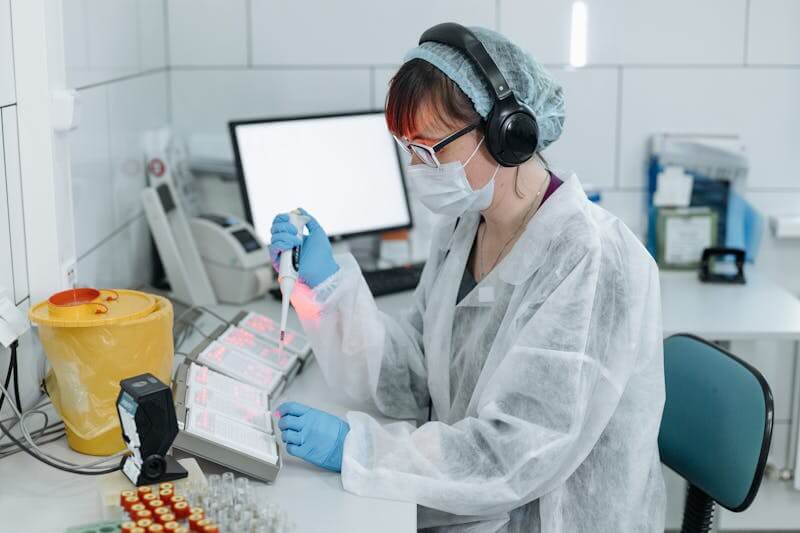

Forget the old lab stereotype. Think of dim lighting. Picture cluttered benches. Imagine scientists scribbling on paper. That image is fading fast. The laboratory of tomorrow is arriving. It is a vibrant, connected hub.
This new space blends smart technology with human creativity. It promises to transform discovery itself. The changes are both profound and practical. They touch everything from workflow to wall color. Let’s explore this exciting future.
Beyond Beakers and Paper Logs
The heart of a smart lab is its data. Every action generates information. Instruments talk to each other. Manual transcription disappears forever. Consider a simple but critical task.
A scientist prepares a complex assay. It requires absolute volumetric precision. The system performs flawless nanoliter pipetting. This happens automatically. The data from this step flows instantly into a digital record. No human hand writes it down. This creates a perfect, unbroken chain of custody. Accuracy soars. Traceability becomes effortless.
The Rise of the Lab Digital Twin
Imagine a perfect virtual copy of your lab. This is a digital twin. It exists inside a computer. Every piece of equipment has a virtual counterpart. Every experiment is simulated first. You can test a hundred protocols in this digital space. You do this before using a single real reagent.
The system predicts bottlenecks. It spots potential errors. This saves enormous amounts of time and money. It allows for wild creativity without physical risk. Scientists become architects of discovery in a risk-free sandbox.
AI: The Ultimate Lab Assistant
Artificial intelligence will be everywhere. It will not replace scientists. It will supercharge them. An AI will monitor experiments in real time. It will analyze patterns a human might miss. It could suggest a new reagent combination. It might recommend halting a failing assay early.
This saves precious resources. AI will also manage lab inventory. It will automatically reorder supplies before they run out. The system learns the lab’s habits. It anticipates needs. Scientists can then focus on big-picture thinking.
A Greener, Leaner Operation
Next-gen labs are sustainable labs. Waste reduction is a core design principle. Tiny microfluidics chips replace plastic consumables. These chips use minuscule reagent volumes. Ultra-precise nanoliter pipetting is standard here. This precision slashes chemical use by ninety-nine percent.
Energy-smart systems power down instruments automatically. Ventilation adjusts based on real-time sensor data. The environmental footprint shrinks dramatically. Operating costs plummet. This green approach is also brilliant economics.
The Human Experience Redefined
What about the people? The smart lab prioritizes their well-being. Ergonomic design is just the start. Ambient lighting adjusts to the time of day. Air quality is constantly optimized. Augmented reality glasses guide complex procedures. Hands-free instructions appear in the scientist’s field of view. Tedious tasks are fully automated.
This removes mundane frustration. Collaboration spaces are inviting and tech-enabled. Team members across the globe can interact with shared data on large touch walls. The lab becomes a place for connection and deep focus.
Total Integration and the Cloud
Silos break down completely. All instruments connect to a central lab operating system. Data lives securely in the cloud. A researcher can check an experiment’s status from their phone. They can approve the next step from home. Historical data from years past is instantly searchable.
This enables powerful meta-analyses. Machine learning algorithms find hidden correlations across thousands of old experiments. Discoveries might emerge from connecting decade-old dots. The cloud turns the entire lab’s history into an active asset.

The Invisible, Intelligent Infrastructure
The magic lies in the unseen layer. Countless sensors cover the smart lab. They monitor temperature. They track humidity. They sense vibration. This network ensures perfect environmental control.
It also enables predictive maintenance. The system alerts technicians about a failing freezer coil weeks before it dies. It prevents catastrophic sample loss. This intelligent infrastructure provides peace of mind. It creates a stable, reliable foundation for all the brilliant science happening above it.
Bottom Line: A Symphony of Synergy
The next-generation smart lab is a symphony. Each technology plays a part. Robotics handle repetition. AI provides insights. The cloud offers limitless memory. Humans conduct the entire process. They ask the bold questions. They interpret the surprising results. They provide the creative spark. The technology handles the predictable.
This synergy liberates scientists. It lets them return to the essence of research. They can explore more. They can wonder freely. The lab of the future is not a cold, robotic place. It is a dynamic workshop for the human mind. It is built to amplify our greatest ideas.